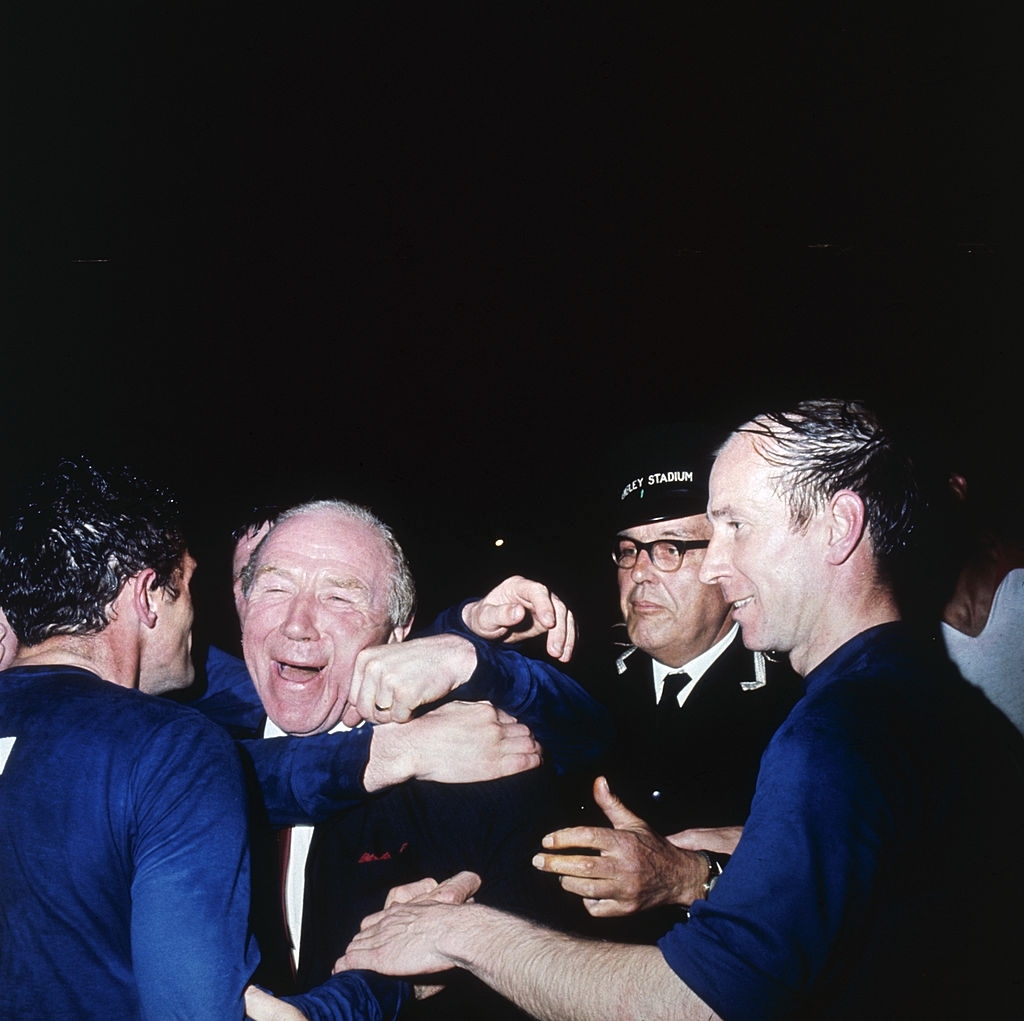
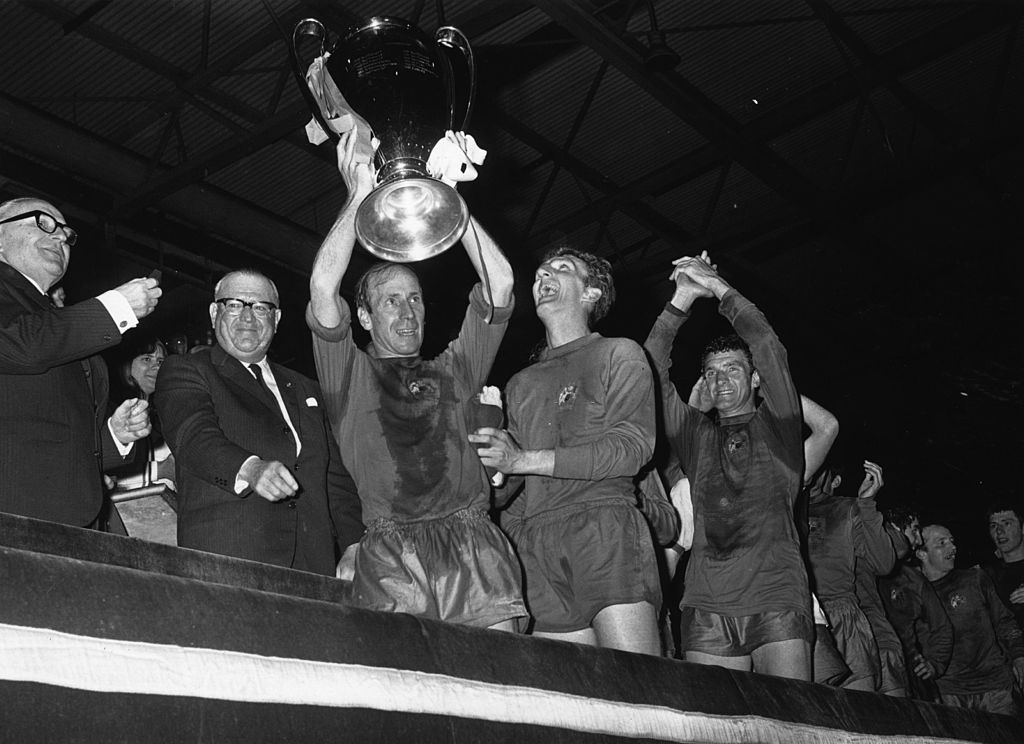
May, 1968. Wembley Stadium, London. After a hundred and twenty minutes in their 54th match of the season, Manchester United have just conquered the mighty Eusébio and his flamboyant Benfica 4-1 to claim the ultimate prize of all for the first time, more than a decade after first campaigning for it. In terms of emotional significance, historical baggage and narrative surrounding the occasion, it was and still remains, the most notable European Cup Final to have ever been played. Perhaps, the most striking scene amongst all the euphoria surrounding the aftermath of this great triumph, is of a man aged 31 (with so few strands of hair covering his balding head, and even less youthful exuberance covering the torture and joy that is battling inside him, that you would be forgiven for hazarding a guess around the mid-fifties mark), who makes his way through the crowd and clasps his boss tightly. As Matt Busby, the immovable rock at the heart of the club, the rigidly catholic and warmly compassionate Scotsman, reciprocates the emotional outpouring from his captain, you can see the decorum melt away. The true catharsis of the moment is difficult to put into words. It could only have been experienced by these two gentlemen, who had stared death in the face, lost their closest mates and people they cared so deeply about, lived with that feeling of having lost them and all this while, working toward this very moment they now celebrate to provide a sense of vindication to their lifetime’s work. The look of relief etched across the face of Manchester United’s Number Nine is both palpable and haunting. A million words could have been written about that brief embrace between two of the game’s finest pioneers. But as a tear-drenched Matt Busby and a sweat-drenched Bobby Charlton clasped each other, the image spoke a wonderful tale of inspiration, tragedy and rebirth.
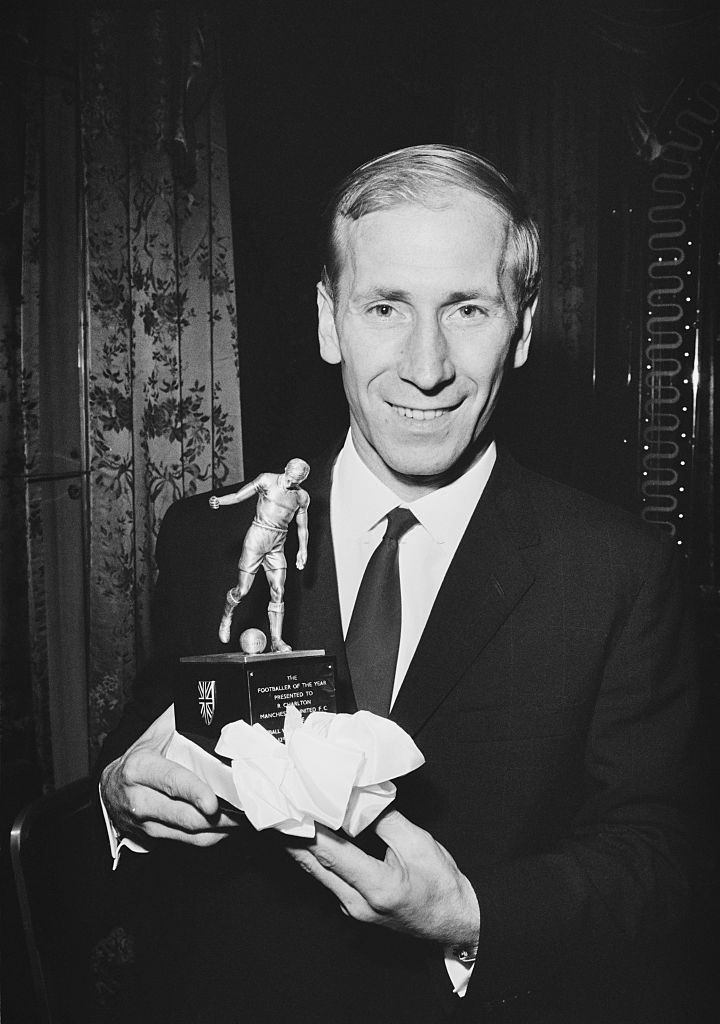
After more than 55 years of that evening at Wembley, Manchester United is perhaps the most commonly known football club that exists. I fail to think of many days where I’ve not spotted someone, somewhere, donning a United kit. To lesser or more extents, everyone has heard of or been associated to this great club somehow. But the journey of this club from being founded by railway yard workers and being bombed during Wars to where it is today, is a remarkable story. And along the timescale, are certain individuals, like Sir Robert Charlton, that have made this club what is is today. To truly understand the greatness of the man that won every trophy a footballer could then dream of winning, from the World Cup for his country, to the League title and FA Cup for his club to the Golden Ball, football’s greatest individual award, we must look beyond the chunks of metal and into the journey of this man. This is one of the most difficult pieces I have ever written because sometimes, words really fail to do proper justice. Here’s an attempt.
20 years prior to the European Cup triumph over Benfica, at the same venue, a crowd of almost 100,000 gathered prior to the FA Cup Final on a sunny afternoon in Wembley, singing songs like ‘She’s a Lassie from Lancashire’ and waiting in anticipation as Matt Busby’s Reds squared up to Blackpool. About 300 miles away in the mining community of Ashington in Northumberland, a ten-year old Robert was playing football with his friends on the streets. One of their parents had a radio, on which the game was playing. Every now and then they’d break from their game to find out what the score was and try to replicate the drama unfolding in London. When it was finally confirmed to little Robert that United had won, his youthful glee was pure bliss and it was then, he decided that when he grew up, there would be nothing like playing for this team everyone called ‘United’.
But how did this story actually begin? Joe Amstrong was Sir Matt’s trusted scout, whose main job was to spot and recruit the best young talents from across the country and bring them to Old Trafford. It was a well-oiled machine in that way. Amstrong found them, Jimmy Murphy nurtured them and Sir Matt made them flourish. It was Joe Armstrong that arrived at Duncan Edwards’s housein Dudley, at 2 in the morning and got him to sign for United then and there. The tales of Joe Armstrong are a piece by themselves. Anyway, on this particular occasion, after a particularly challenging winter, he found himself making his way to the sides of the ground where East Northumberland Schoolboys were playing. After the final whistle, the scouts from other clubs approched their goalkeeper. He, however had his eyes peeled on the centre-forward who hadn’t played particularly well, in truth. He approached young Robert’s mother and told her that her boy would play for England before he was 21 and that he’d like to bring him to Manchester United, young Bobby Charlton was thrilled. He was in Manchester in under a month, this time at Maine Road, at a trial for England schoolboys where he met Don Revie whom he admired. The great man tried to convince him that City had more of a future than United but one glance at Old Trafford from the bus headed the way of the Railway Station and his mind was made up. Newcastle, who he supported, Sunderland and Leeds United (who he had a long family history with), all registered an interest but nothing was gonna alter the course of Bobby Charlton’s story with Manchester United. As Bobby Charlton awaited his time, the Busby Babes slowly started blossoming. A rare big buy in Tommy Taylor from Barnsley meant the team was almost complete. As Taylor made an instant impact at Old Trafford scoring twice in a 5-2 win over Preston, Bobby Charlton dreamt of the same fortune on the train back. His time wasn’t far away. He made his first-team debut against Charlton Athletic in 1956, hiding an ankle sprain from manager Matt Busby and scoring two goals in a 4-2 win. Charlton played 17 times for United in that first season, managing a total of 12 goals in all competitions as United won the league.
Charlton was an established player by the time the next season was fully underway, which saw United, as current League champions, become the first English team to compete in the European Cup. Previously, the Football Association had scorned the competition, but United made progress, reaching the semi-finals where they lost to holders Real Madrid. Their reputation was further enhanced the next season in the 1957–58 European Cup as they reached the quarter-finals to play Red Star Belgrade. In the first leg at home, United won 2–1. The return in Yugoslavia saw Charlton score twice as United stormed 3–0 ahead, although the hosts came back to earn a 3–3 draw. However, United maintained their aggregate lead to reach the last four and were in jubilant mood as they left to catch their flight home, thinking of an important League game against Wolves at the weekend.
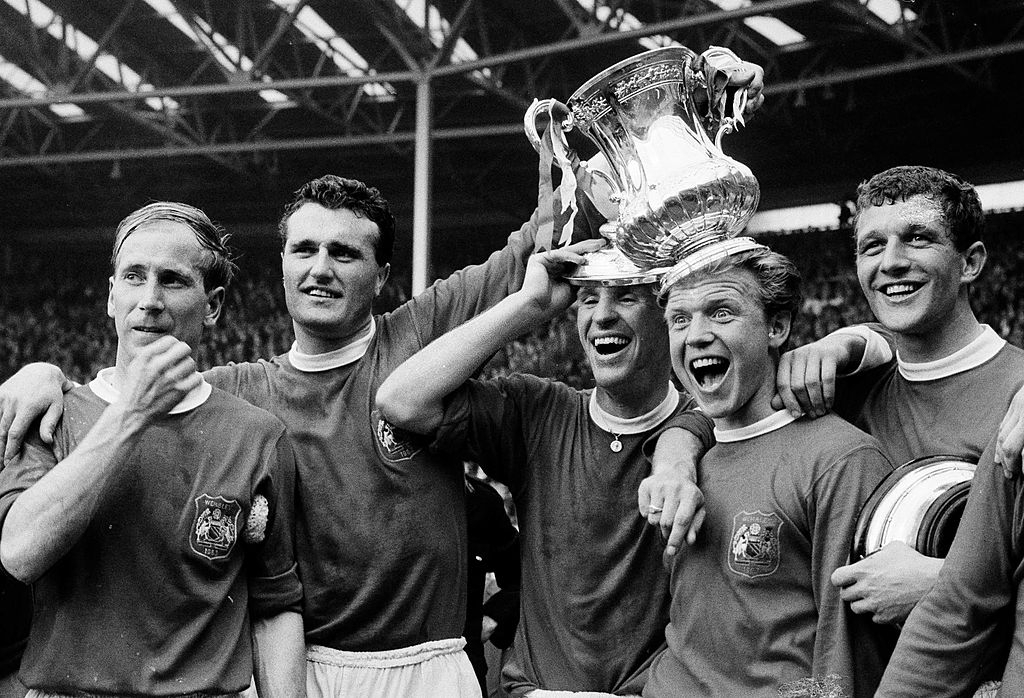
What happened next, we all know. Not only did Britian’s best team perish in the Munich snow, it was a ridiculously young one, as well. All of the players that lost their lives so tragically had the best part of their careers ahead of them. Duncan Edwards, for instance, Britian’s finest footballer at the time, would surely have captained Walter Winterbottom’s side at the World Cup later that year.
A lot has been written about the Munich Air Disaster. But what perhaps is less spoken about, is the effect it had on the survivors. In some way, we have all dealt with loss of close people in our lives. But the circumstance surrounding the Munich Air Disaster was quite extraordinary. Sir Matt Busby, for instance, was too infirm to even find out what had happened to his players and staff. When the truth was broken to him, the cloud of guilt and remorse that descended on him like dark rain clouds over a valley, were to remain until the day he breathed his last. As for Bobby Charlton, he had stared death in the eyes before being yanked back to life by Harry Gregg. It was because he had changed seats and moved upfront before takeoff, that he was still breathing. Imagine waking up to dead bodies of teammates you spent everyday with. In training, before and after games, in pubs and social events. They weren’t just teammates at that point, these were your brothers, your mates. People he had seen laughing and playing cards just few moments back. The trauma and guilt would have been too much to even think of returning to the same training ground and play games without them. Yet, when West Bromwich came to Old Trafford for a Cup Replay just few days later, it was he who beat three men setting up Colin Webster for the winner in the 89th minute. In April, he fulfilled Joe Armstrong’s prophecy and started for England against the Scots at Wembley before he turned 21. His volley being the pick of the goals.
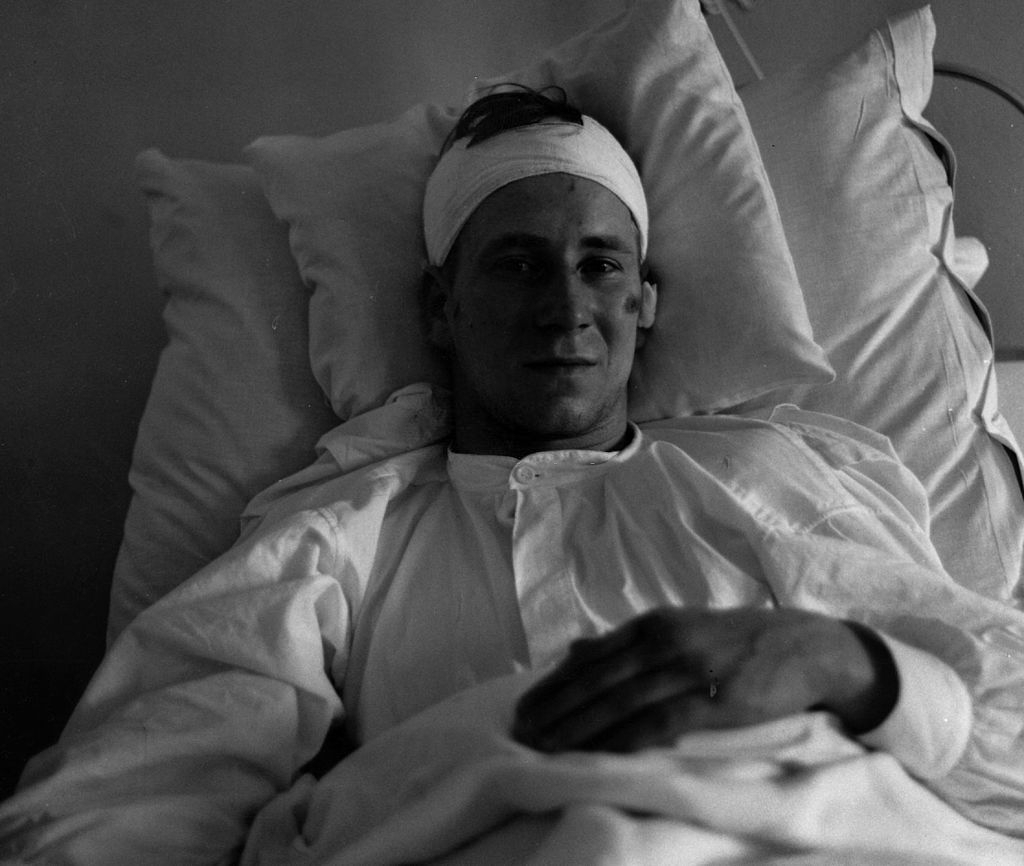
Over the next decade, as Bubsy and Murphy toiled to pick up Manchester United from the rubbles, it was this man, still very young, that became the reference point for every player they signed, every youth player that came through. The pillar of courage, resilience and class. They all wanted to emulate the man’s greatness, humility and quality. From 1959 to 1963, Charlton registered hat-tricks for England every alternate year. After his hattrick against Switzerland in 1963, his England tally stood at 30, equalling the record. A goal against Wales later that year meant he held the record alone. A home World Cup three years later was the crowning moment of his career. He managed three goals as England lifted the trophy aloft on home soil and when you put context into Bobby Charlton’s journey to this point, it really does seem remarkable. His 49 goals for England remained a record for 45 years until a certain Wayne Rooney broke it in 2015.
And here he was, on the same venue that he had given his countrymen supreme footballing bliss, just two years later, physically and emotionally drained as he held the European Cup in his hands and looked up to the skies. For the ones that dreamt but could not live to see it.
If you thought his 249 goals, his role in the rebuild post-Munich, scoring vital goals enroute to League and Cup wins and scoring twice in an European Cup Final was enough to cement his place as a true foundation pillar of this great club, his story does not end there. In 1986, at a Scotland training camp in Mexico, it was Bobby Charlton, then United director that made an approach to a certain Alex Ferguson who was taking training for the Scots and was gaffer of Aberdeen and said to him, if he ever fancied a move down South, a call would be appreciated. Having always retained a keen interest in Scottish football, he knew what it had taken for a man to end the Old Firm dominance with a club of Aberdeen’s stature. And his identification of a prospective new Busby set Manchester United on a course that doesn’t seem to bad stood in 2023. Lesser known perhaps is that when Mike Edelson, a fellow United director rang Aberdeen faking to be Gordon Strachan’s accountant to patch through to Ferguson, Charlton looked on.
As a player, he was phenomenal, as a person, even better. In the history of this great game, few have left an impact as striking as Sir Robert Charlton CBE. In the history of the game, there have perhaps been greater players. But when you truly understand this man’s story, you cannot help shed a tear. Manchester United lost great players in 1958. If they hadn’t, the Babes would have almost certainly taken over the European throne from the great Real Madrid. But to fall, endure and succeed, is the essence of this great football club. And that, we owe to Sir Bobby. Without him, this great instituition of the game would not be what it is today. And now that he’s gone, it’s like someone’s taken the umbrella from upon your head when it’s pouring down. His grace, his talent and courage transcended football. I never saw him play but his dedication to United was evident for all to see especially on that cold night in Stoke when Wayne Rooney broke his record. A man in his 80s, still felt the need to be there to acknowledge that feat. His story ties down to the roots of Manchester United, the origin of Manchester United. The struggle, the glory.
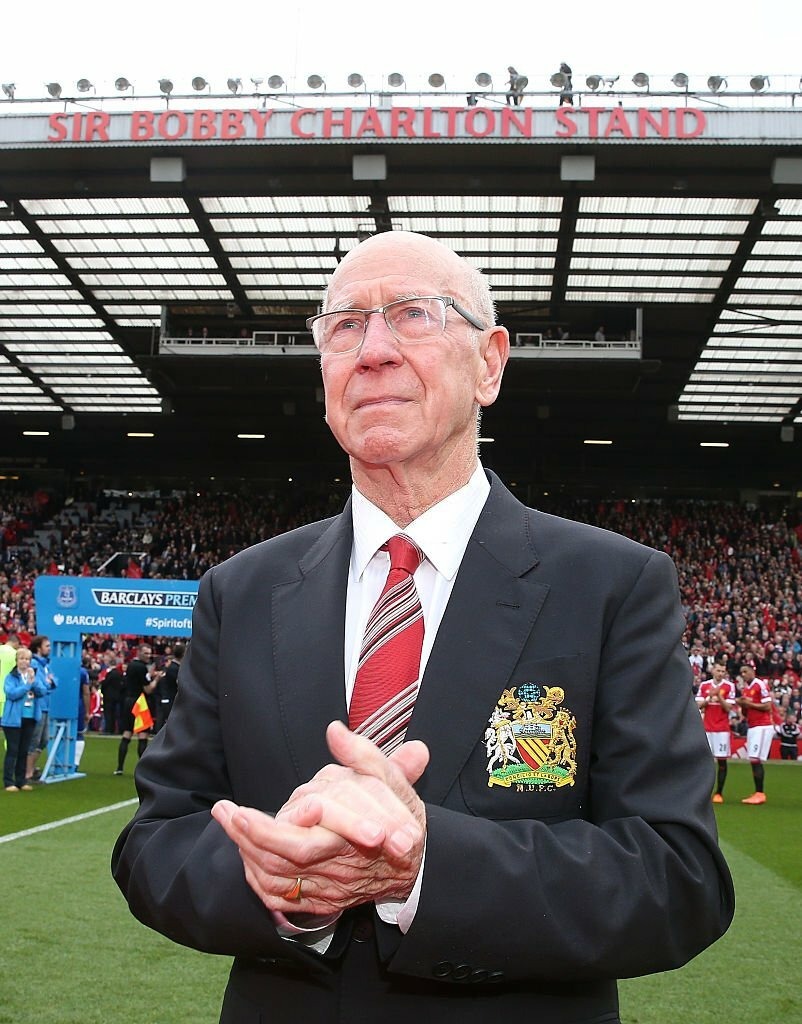
It took me a good ten minutes to come to terms with that Whatsapp text that read Sir Bobby followed by a teary emoji. A story like no other, we can only feel lucky that a man like him was associated with the football club we support. An ambassador, a guiding light, an inspiration, a hero, a legend. I knew he was watching on as United beat Copenhagen in the Champions League with plenty of last minute drama. Vinatge United. ‘A Knight to remember’ as United’s sole goalscorer on the night profoundly put it.
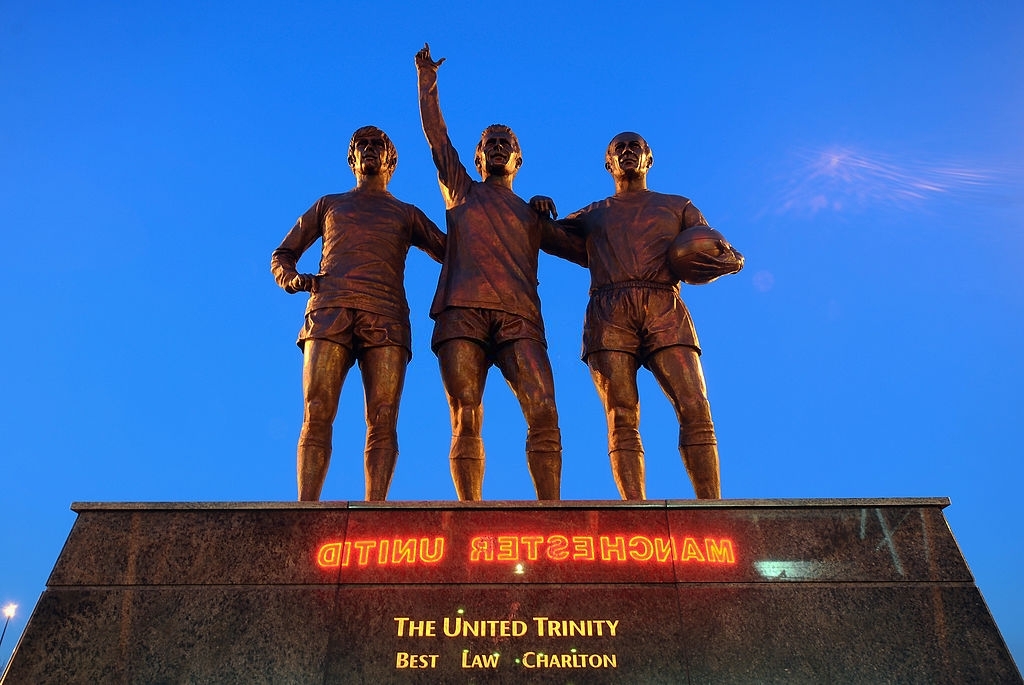
The last of the great Busby Babes. A third of The Trinity. More than 60 years of service to this football club. As player, director and ambassador. Till the day this football club runs, his name will be etched in history. Rest easy, Sir Bobby. We will miss you.
There’s only one Bobby Charlton.
 Into Added Time