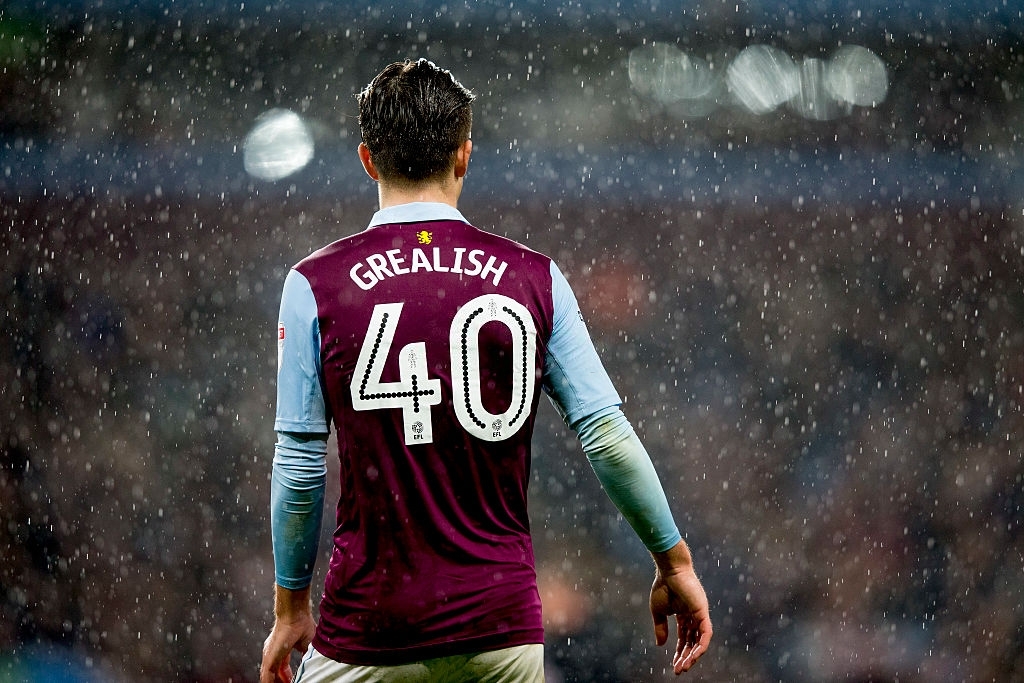
The hair had almost completely gone, the legs were on their way. After a hundred and twenty minutes of this one and fifty two other games all season, Manchester United’s all time leading goalscorer and World Footballer of the Year not long ago, stood on the Wembley pitch, sweat drenched and physically spent, soaking it all in. Literally and otherwise. It seemed like a different lifetime when on a smog-covered and frosty winter evening, Joe Armstrong had approached his mother after a game between school teams and conveyed to her, that her son would play for England before he turned 21. And indeed, the boy would go on to guide his country to the game’s greatest prize some fifteen years later. But a hollow of incompleteness kept tugging away. The sense of Manchester United’s unfulfilled destiny in Europe. The feeling of carrying the world’s weight on his shoulders. As Bobby Charlton lifted the trophy in the air, he must’ve heard a voice emerging from the hordes in a thick Black County accent saying “You’ve done alright, chief”. Duncan, Roger, Eddie, the others who were supposed to be part of this, Matt, Jimmy, his current teammates and the thousands back in Manchester. They had conquered Europe. If there ever was a football club’s story with immeasurable theatrical value, it’s Manchester United’s. The story of tragedy and triumph. Triumph from tragedy. Yet, the troughs are just as low. Five years on from the pinnacle of European glory, United went down. How could it genuinely be possible? How did a club of this size go 26 years from Sir Matt’s last title to it’s next? The answer cannot be synopsized concisely enough. How did the same club go from three European finals in four years and title holders in 2013 to the apparent mess it is in now? Notice the pattern. Running in circles.
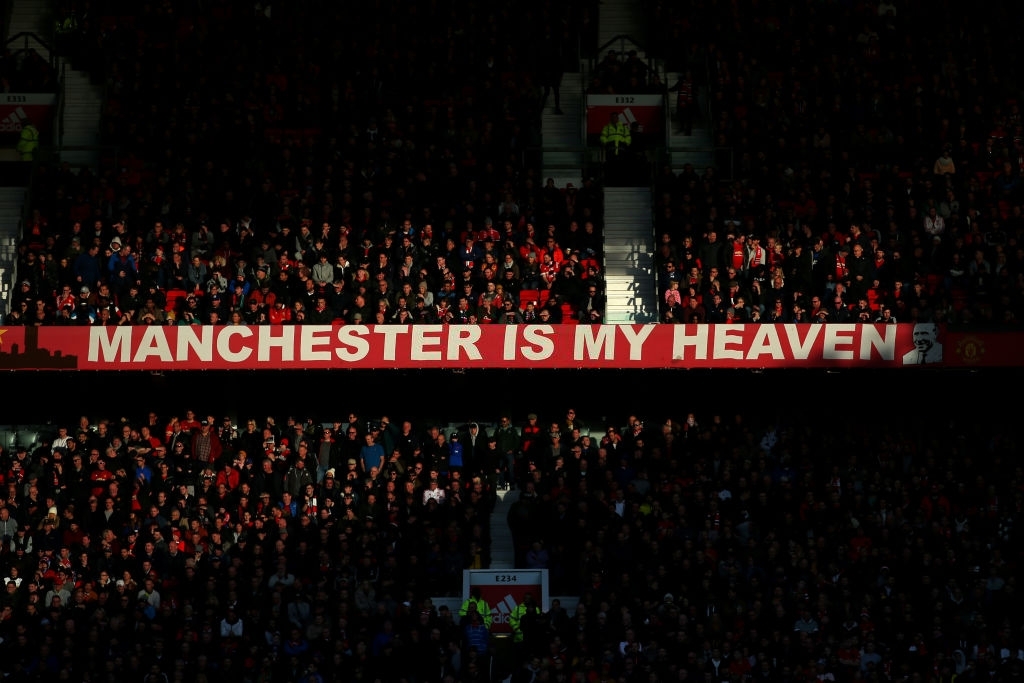
There are football clubs across the world with global reputes and a commitment to their past but none as massive and decorated as Manchester United. Yet, the truth is – in the recent past and all those years back, they have made mistakes that weren’t apparent or intended and they continue doing so. After Wembley ‘68 when the fleeting thought of retirement first crossed Sir Matt’s mind, he knew how difficult the succession could be and how it possibly was time for the baton to be passed over. United were being outplayed by lesser teams who exhibited more cohesion, better organisation and were overall better drilled. Sound familiar? The likes of Revie’s Leeds, Shankly’s Liverpool and Clough’s Derby (both out of the Second Division) displayed those. The game was changing and Busby knew it. Wilf McGuinness, then only 31, a Busby Babe himself and experienced in coaching, having been with United and more notably, Sir Alf Ramsey’s setup with England for the World Cup, was handed the job. And Busby assumed the role of general manager. Something that Mercer and Allison had done successfully at City and Don Howe with Bertie Mee were tasting success with, at Arsenal. At United however, there was a clear disconnection between the head-coach and the general manager wherein Wilf would take training and Sir Matt would assume media responsibilities. This resulted in a mess whereby Sir Matt, detached from team affairs, could not accurately answer the media about injuries, suspensions and other daily affairs and Wilf deemed media duties out of his jurisdiction. Not to mention the final call on contracts wasn’t clear as well. Could this have been done better, in a more polished manner or been avoided altogether? Yes and yes. Was this ill-intended? No. Compare this disparity in intention and outcome to the post-Ferguson years. The heavy involvement and insistence in bringing back a global superstar at the twilight of his career to uproot the building blocks and disrupt a team on the rise by Sir Alex, although well-intended, was largely punishing. Could it have been avoided? Yes. Coming to involvement in managerial choices, when Wilf McGuinness was sacked after a 4-4 draw with Derby at The Baseball Ground, Sir Matt had met with Jock Stein (European Cup winners and five-time league champions in as many years with Celtic) in order to persuade him to move to United. Although Jock was keen, the insistence on retaining the staff at United and the money by Sir Matt, the Jock turned it down. Could more persistence had helped? Suggestively so, but we can never tell. Could Pep Guardiola have been convinced with more insistence to carry forward the success United had under Sir Alex, especially when he had been personally met with? Again, suggestively. The wrong picks in Frank O’Farell and David Moyes, both of whom are incredible football league mangers but questionable stylistically and compatibility-wise, with United, could definitely have been avoided. (Little-known fact: United missed out on Brian Clough because Sir Matt deemed him too outspoken and on-the-face for his liking.) We as United fans can never be grateful enough to Sir Matt and Sir Alex for their achievements with United. But certain decisions post their retirement have done and continue to, do us more harm than good. Although it is worth noting that the aura of these personalities are so daunting that their successes keep eating away at the new men in charge and the clubs, as a result, stagnate. Decisions are muffled and the ability to make them, in isolation, in line with the present-day state of affairs, are often lost. From Busby and McGuinness to Sir Alex and David Moyes. From Revie and Clough to Wenger and Emery.

So what is the way to break out of this vicious circle? A balance. Like with most things in life. It should be possible to both respect and align with the DNA of the club and try to bring to the present day, those aspects of the club that perhaps, are not. Like when Tommy Docherty took charge, all those years back and made the tough calls, United are crying out for someone who can replicate that with an iron fist today. The team had to simply move on from the old guard and the likes of Bobby Charlton, George Best, Paddy Crerand and so many others. They did not fit with the tactical horizon of the game then and parting ways was a necessary evil. That does not however, undermine the gravity of the three names mentioned here or their achievements. They will forever be cherished. Much like today, where players like David De Gea and Cristiano Ronaldo simply must be moved on. Club legends, both of them. But incredibly far off the mark for what United should be fielding to be on level pegging with the more successful teams, stylistically and tactically. (Twice during Sir Matt’s tenure, the bank was broken for a goalkeeper. First, in ‘57, when a hesitance in Ray Wood’s game in coming out to claim crosses forced the boss’s hand to buy Harry Gregg and second, when Pat Dunne, despite being a good shot-stopper wasn’t commanding enough. In came Stepney. Just a league title and a European Cup came with him in the next two years. The money was paid because the difference a goalkeeper makes to a team cannot be understated.) But the Doc never overlooked the Busby-ethos or tried to implement an entirely different style. Because ‘The United Way’ is a thing. What is it? Among loads of values which cannot be quantified, tangibly, at the heart of it, it is highly enthralling, fast, relentless attacking football with quick, aggressive players who’re good enough and big enough to represent United. Largely transitional football. It is with this foundation and the addition of new blood like Gordon Hill, Steve Coppell, Martin Buchan, Lou Macari and the others, raced out of the Second Division, won the FA Cup and pushed Liverpool all the way in the league. Whoever United choose to appoint next, must align with these things. There’s a cultural and historical obligation that every United team must adhere to. The board, it’s advisors and the fans must give a project the time and patience it deserves.
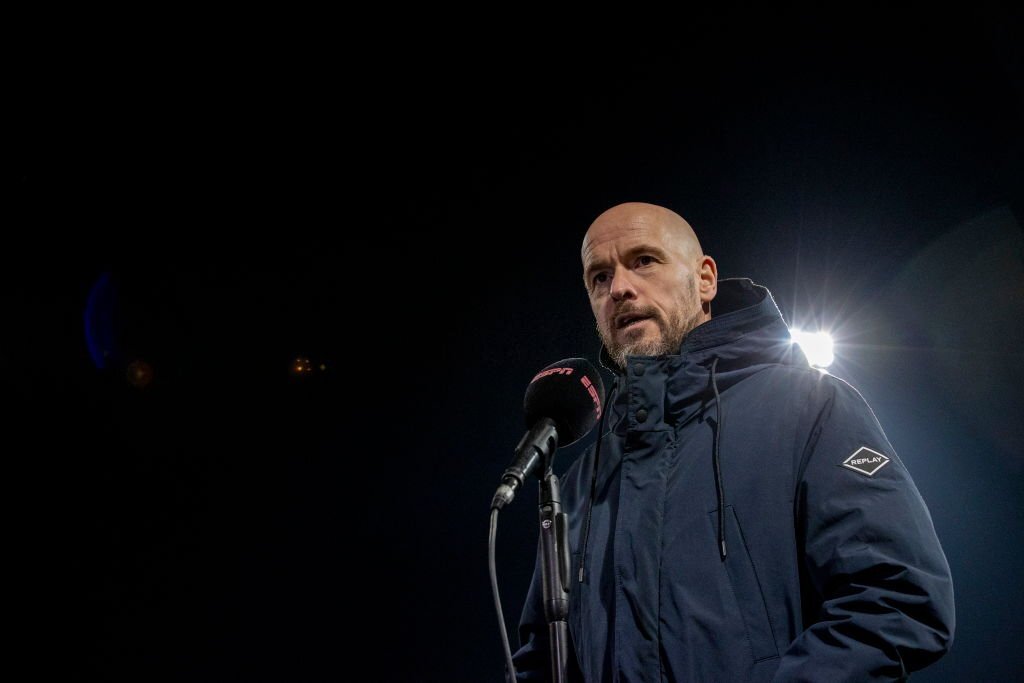
At the time of writing, United are heavily linked with a move for Erik Ten Hag. A man who has turned a lot of eyes with his Ajax side, that he has been in charge of, since December 2017. Most fans remember the dreamy European journey that Ajax went on, in 2018-19. But even besides that, there has been consistency in results, performances and silverware right through his tenure. This is where the heads are turned. However, it is important to note the structure at Ajax, the availability of a clean slate and players that were both easier to coach and deal with. Not to forget, they were easily the best bunch in the league too. No mess from the hierarchy to deal with, no dressing room egos, no vulture-esque media to navigate past and certainly not the prying eyes of the football world. A man with a resolute idea of how the game should be played and an ability to get that through to his players but who, remains largely and for most parts, an unknown quantity in the showbiz arena. At clubs like United, it’s the intangibles that break you. When Ajax succeed in Europe, it’s an underdog story, easy to feel warm about. When they do not, billions across the globe don’t voice their opinions on how they feel ‘n’ number of things could’ve been done differently. Positional play and the on-ball, off-ball intricacies need time to be ingrained into the players. It is oftentimes boring and accompanied with drearily dull performances and results. United tried it with Louis Van-Gaal. Old Trafford voiced it’s discomfort. Take a look at Arsenal’s league results and positions over the last two seasons to get a fair idea. The finished product is beautiful but the way to it is drab and painful. And United are famous for patience and backing, aren’t they? Each requirement for the first team is definitely not addressed two transfer-windows too late.
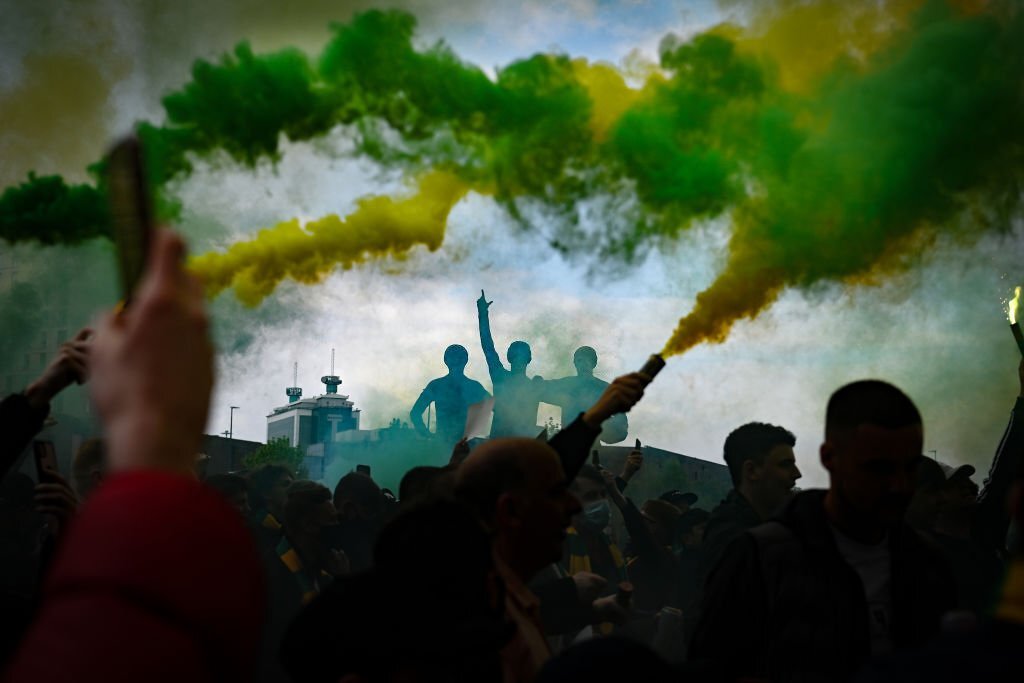
The stories of Newton Heath, Louis Rocca, Busby, Murphy, Munich, Ferguson and so many others make Manchester United what it is. This is no ordinary club. It’s a club like no other. How many times have Manchester City needed an injury-time goal to win games of football this season? They’re insanely good and unbelievably consistent, right? Almost like a machine. I’m sure we wouldn’t be complaining if that happened to be us and we won the league most seasons. But something about it wouldn’t feel right. It’s because those last minute winners mean something to us that most of us wouldn’t be able to explain. A sense of belonging and attachment to the fabric of this club. Divine in it’s stature yet glaringly human in it’s build. A sense of comfort in imperfections. Other clubs need to win trophies. United need to win and win in dramatic sense. A weird commitment to a production-value and theatricality that Manchester United are associated with. It’s not enough to win the league after 26 years. It’s important to go behind at home and score twice from two corners in the last five minutes. It’s not enough to win the treble. It needs to be won with two goals in injury time. These highs, the scars of Munich and ‘74, they all combine to form this extraordinary football club, unrivalled in history and romance. Every brick and every blade of grass at Old Trafford, has a story to tell. Stories of wars, bombings, adversity, defiance and most importantly, success. And these need to be respected and built around, not built over.
 Into Added Time