“Because he’s the hero Gotham deserves, but not the one it needs right now. So we’ll hunt him. Because he can take it. Because he’s not our hero. He’s a silent guardian, a watchful protector. A dark knight.”
And Gotham lived on, to see another sunrise, to face another day. Life went on. As is it’s way. I do not know if the sentiment gets across quite as intended but such is the nature of the situation which Manchester United find themselves in. They had to set the dogs on their Dark Knight. Not because they wanted to, but because there simply wasn’t a way of making it out alive. And at times, death does come as a blessing. Unfortunately for an honest man and a thorough Red in Ole Solskjaer, although he finds his personal and collective dream which he shared with the Old Trafford faithful, of leading United back to the very top, dead, his blessings, prayers and all the good work he did of getting the launchpad ready, lives on and will forever do with the club and these set of lads he put together.
But life and the football or to sprinkle a touch of theatricality – the show, must go on. In December of 1998, Manchester United were on a tricky run, winning just the one game in the entire month, at home to Forest on Boxing Day. 1-1 draws at Villa Park and at home against Chelsea were frustrating but perhaps the most frustrating was the 2-2 away at Tottenham. Gary Neville got sent off with United two ahead. Two excellent finishes. The successor of the man who scored both of United’s goals on that day however, was in the midst of a sixteen match unbeaten run after winning promotion to the second division with SSV Ulm. And it was in a December evening of ‘98, that he appeared on Das Aktuelle Sportstudio and stunned the football audience of Germany by explaining his ‘gegenpress’, the pressing traps and the broader picture in turn exposing some major flaws of the established German game at the time.
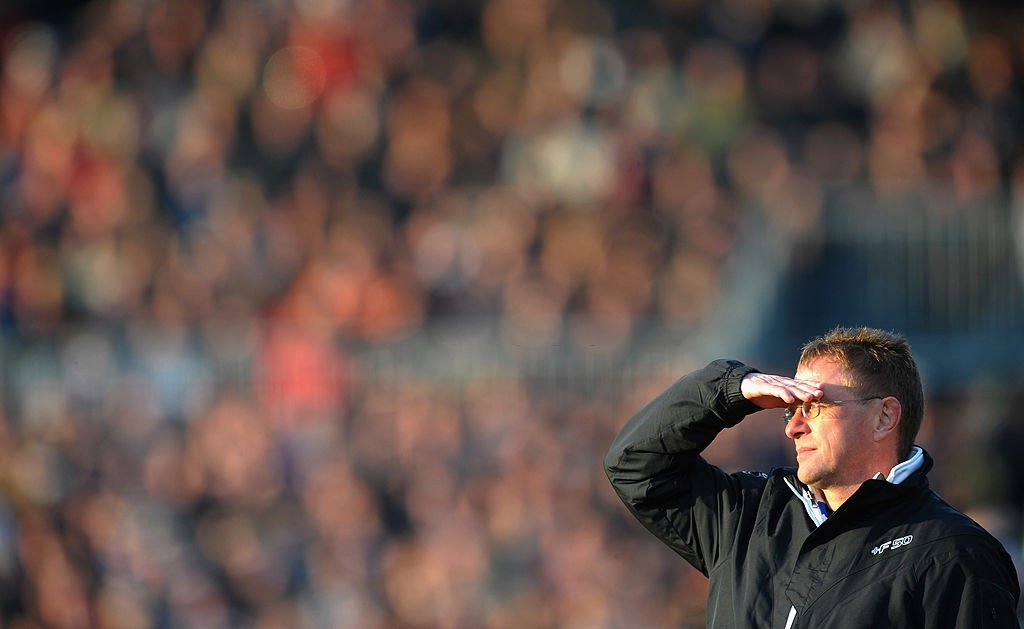
Germany, at the time were in somewhat of a limbo and at crossroads about the direction the national team should head in. For the entire decade, they had flirted with the idea of moving away from the system of the sweeper but never had the bollocks to actually go ahead with it. The system had brought them unparalleled success at an international level afterall. Right from when the football world’s eyes were being turned towards the highly glamorous Dutch system in the early 70s and Cruyff’s ‘Total Football’, Germany stuck with their guns. The two sides met in the World Cup final of ‘74. Germany were vindicated. Beckenbauer dictated the game from sweeper, stationed deeper than the conventional definition of where a sweeper should be positioned – screening the backline behind the midfield. He then won the World Cup again in ‘90. Same system. So to go and challenge the status quo and to do it to such a system that had brought as much success, was a seismic step. It wasn’t well perceived and was naturally snubbed. But Ralf and his mentor Helmut GroB realised the fact that this system was over dependent on the performances of the sweeper and even though the nation had produced absolute greats of the game in that position in Beckenbauer, Matthaus and Sommer, this wasn’t sustainable. Their foresight, when you put the state of the current game into perspective, was truly remarkable.
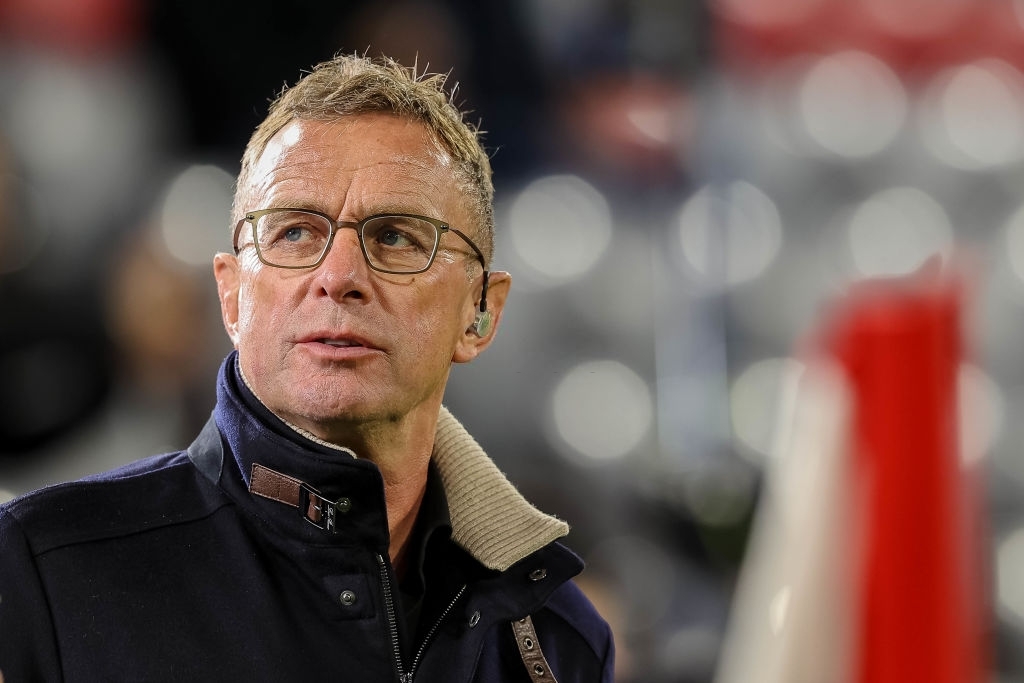
When you look at how the game has evolved since then, Ralf Rangnick’s presentation, that cold December evening, was nothing short of genius. Rangnick never won the First Division Championship in Germany. But he did win the argument. From Ulm, he took over his boyhood club Stuttgart. A 2-0 loss to start off. His wisdom and idea needed time to be properly implemented. The club finished 8th in his first full season and the year after, with the club in the relegation zone come midway, he was fired. Promotion to the first division with Hannover 96 and a second place finish with Schalke 04 would ensue. But it was at 1899 Hoffenheim that the football world sat upright and took notice. Hoffenheim were in the dark depths of the third division when Rangnick arrived. Two seasons later, they were playing in the Bundesliga and playing like they belonged too. It was here that he got the freedom of implementing his ideas and seeing it blossom. A remarkable ability of improving players and covering for their weaknesses. So what changed from the days of the Libero and a rigid man-marking system? An emphasis on zonal and spatial coverage. The energy saved from man-marking and instead focusing on cover-play could directly improve a team’s in possession performance. In possession, the ideas are simplified such that you play the first pass forward in transition and do so by training your mind and feet to come to level ground with the speed of the game.
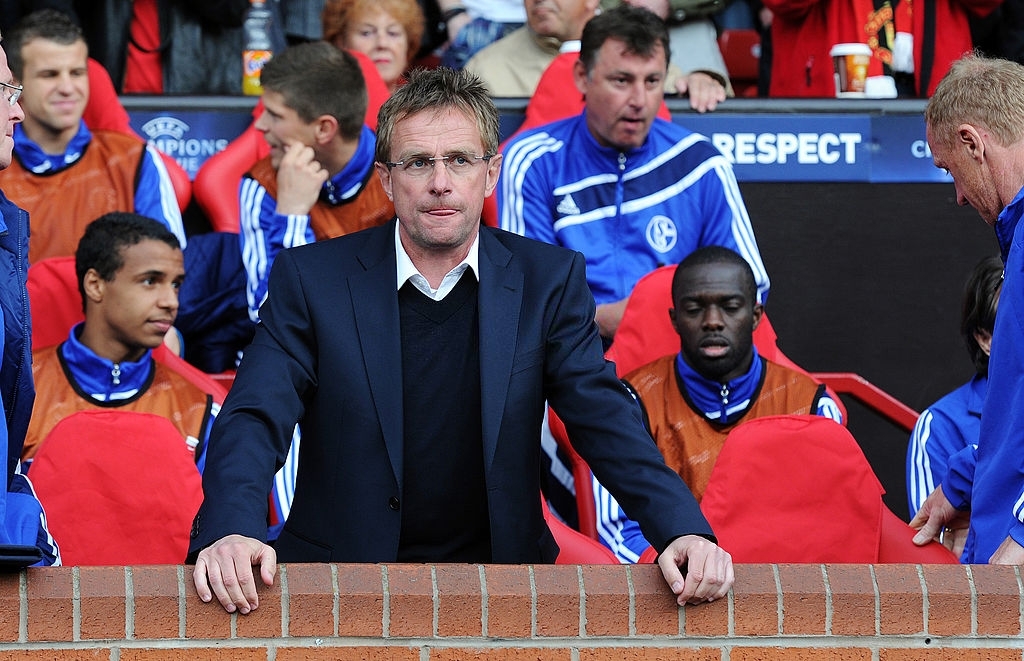
So how does this marry into a club of Manchester United’s size and a commitment to ‘The United Way’? Be it with Hoffenheim or the Red Bull Group, Ralf has always cherished the availability of a clean slate to fill according to his own whims and fancies. Are United too corporate for that? His career tells us, if allowed to blossom, the end product is something beautiful. Jurgen Klopp’s Liverpool are prime examples. The start was oftentimes frustrating because the painting was half-done. So are we looking at Rangnick beyond the summer? Or a similar philosophy being implemented by whoever comes in next? This is a step very much in the right direction but only if United buy into it entirely. Something they haven’t done post-Ferguson.
And it all stems down to United being too corporate again. The Cristiano Ronaldo signing is the biggest example one can possibly think of. Yes, the romance and nostalgia play a big part in football. But at what point do you stop letting the past bite into the present and subsequently, the future? No matter how bad the football was during the last few months of Solskjaer’s reign, history tells us that it was a team, very much on the upward slope, albeit still learning but I’d argue United’s best bet at the moment at stabilizing and building for the post-Klopp/post-Pep era anyway. But the glamour was too much to turn down and the problem posed, too big for Ole. As it has been time and time again under the Glazers. Rangnick taking his knowledge and foresight into the boardroom after his interim phase can only be a good thing but when the boardroom politics at Old Trafford hits you, even the best can sweat. Maybe with the appointment of Murtough and Fletcher and Richard Arnold focusing just on financial matters is a step away from the norm but not until we see concrete proof. Every now and again something pops up which makes sense financially but not football-wise and the former is prioritized. And of course the situation isn’t going to go from ice and frost to sunshine and butterflies in a training session. Teams with a set-in-stone identity often have to suffer until the ultimate picture is reached. And patience is the base of that as well. But patience is this industry, at this club, in today’s day and age is of course, a foreign concept. If we don’t have enough trophy pictures of our team in recent times, to spam comment sections, why’re we even doing this, isn’t it? Rangnick still has to work around the frailties of an ageing superstar, the nature of whose game stands against the founding pillars of Rangnick’s beliefs. He still has to work with a very limited number of central midfield options. He still needs to deliver the goods because the general consensus is, this is a team that is ready to go toe to toe with the top dogs and the only thing standing in it’s way was Ole Solskjaer with a smile on his face.
And so we stand at yet another interval of ‘Make United Great Again’. The next installment will bring to us, a teacher and thinker of this great game, trying to go against the tide, trying to take United back to the very top whilst having to face the same demons, having to walk the same dark corridors of uncertainty, self-doubt and helplessness as his predecessors did and emerge on top. He’s certainly capable of it. Can he endure enough? Time will tell. And we as fans can only get behind what seems to be a step in the positive direction by the club and get behind the new gaffer, who’ll no doubt be facing the vultures as all the former occupants of his throne have done. Doing so, whilst acknowledging the honest efforts of Ole.
Over to you then, Ralf. Unwreck it.
 Into Added Time